
Sex Offender Checks in Coryell County
The Texas Public Sex Offender Registry is the primary official search channel for Coryell County. Texas DPS manages the statewide data, while a local law-enforcement authority registers and verifies the person. Inside an incorporated city, that authority generally is the city police department. Outside city limits, the Coryell County Sheriff generally fills the local role. That split matters when a reader needs to report a possible address change or ask about compliance.
A Coryell County registry result should be treated as a public-safety record with a defined scope. It is not a list of every sex offense, every conviction, or every person who may once have had a registration duty. Some juvenile registration data can be made nonpublic by court order. Statutory end dates also differ. Start with the DPS search, use the national layer when a location crosses state lines, and seek local confirmation before relying on a listed address.
Note: A listed address is a reported registry fact, not proof that a person is physically present there at the moment of a search.
How to Search the Texas Public Sex Offender Registry
The official registry offers several ways to narrow a Coryell County sex offender search. Its dynamic interface did not expose every required field or radius option during research, so readers should follow the labels shown on the live form rather than assume a fixed set of controls. Name, address or city, map, and SID modes are documented. Filters may include county, ZIP, address type, current records, and risk or status.
- Open the Texas DPS registry and review its use conditions before choosing a search mode.
- Try a name, Coryell County location, city or address search. Use SID only when that state identifier is known.
- Apply only the live filters that fit the question, such as Current Only or Primary Only, and submit the search.
- Open the matching profile, compare identifiers, read the offense and status fields, and verify critical facts locally.
| Field or control | Type | Required | Use and limits |
|---|---|---|---|
| Search by Name | Mode or tab | Unknown | Official materials reference a last name or initial. |
| Address/City | Mode or tab | City required in this mode | Street, city, ZIP, and county controls can vary. |
| Map | Mode or tab | Unknown | Confirm the live map and any radius choices before use. |
| SID | Mode or text | Unknown | Searches by the Texas state identifier. |
| Primary Only | Checkbox | No or unknown | Restricts the address type where supported. |
| Current Only | Checkbox | No or unknown | May exclude historical entries. |
| Status/Risk | Filter | No or unknown | May include Low, Moderate, High, and Civil Commitment concepts. |
The official DPS search screen shows the current Coryell County registry controls.
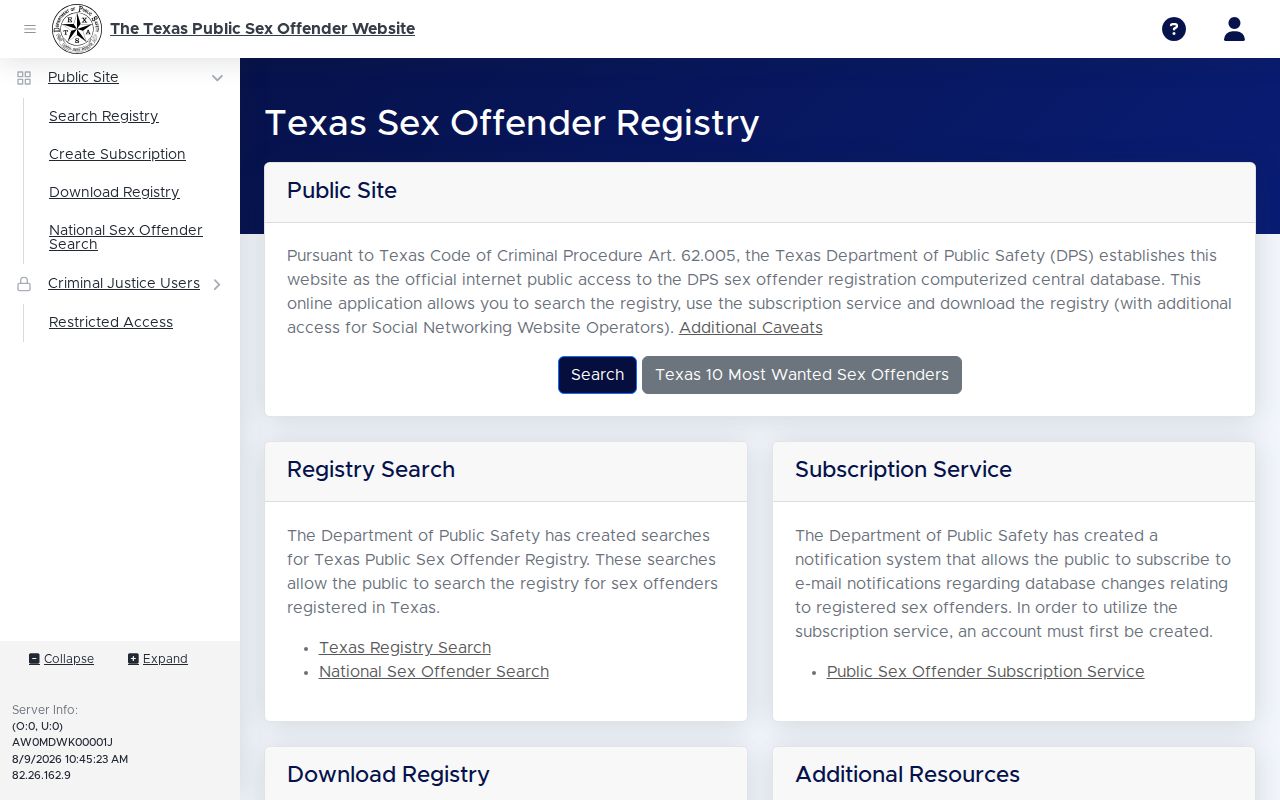
Using the live screen prevents an old list of fields or options from being mistaken for the registry’s current design.
Coryell Registry Radius Limits
Exact public map radii and full dropdown choices could not be verified from the dynamic DPS interface. That gap is worth stating because a map boundary can change the apparent result set. A searcher should read the distance and address rules shown in the live form, then rerun the search with a broader location when a first pass seems too narrow. Do not treat the absence of a marker as proof that no registered person is nearby.
No statewide public proximity-email alert was verified either. Texas does provide formal notification in specified cases, including English and Spanish postcards when a civilly committed sexually violent predator or high-risk registrant is released or moves. School notification can apply in certain child or student cases. These statutory notices are different from an on-demand public email alert service.
Inside a Registry Profile
A Coryell County registry profile combines identity, address, offense, and registration data that Texas law makes public. It can help distinguish people who share a similar name and explain why a registration duty exists. Read the full profile instead of relying on a name or map pin. The public view leaves out several sensitive items collected by the registration program.
| Name and aliases | Published names and known aliases used to identify the listed person. |
|---|---|
| Photo and description | A current color photograph plus sex, race, age or birth date, height, weight, hair, and eye details. |
| Registered address | The address made public under statute; it should be verified with the registering authority when critical. |
| Reportable offense | Conviction or adjudication information supporting the duty to register. |
| Risk and compliance | Published risk or status information, subject to the meaning Texas assigns those labels. |
| Education affiliation | Higher-education information where the statute makes it applicable. |
Public profiles do not display Social Security numbers, driver-license numbers, phone numbers, online identifiers, employer contact details, victim-identifying facts, or other confidential data. Some vehicle, work, education, and online information may be collected for law-enforcement use without becoming part of the public Coryell County result.
Coryell County DPS Registry Program
Texas DPS explains the statewide framework on its Sex Offender Registration Program page. That source is the best place to confirm program contacts, state guidance, and current public information practices. Local authorities supply and verify records, while DPS operates the public statewide layer.
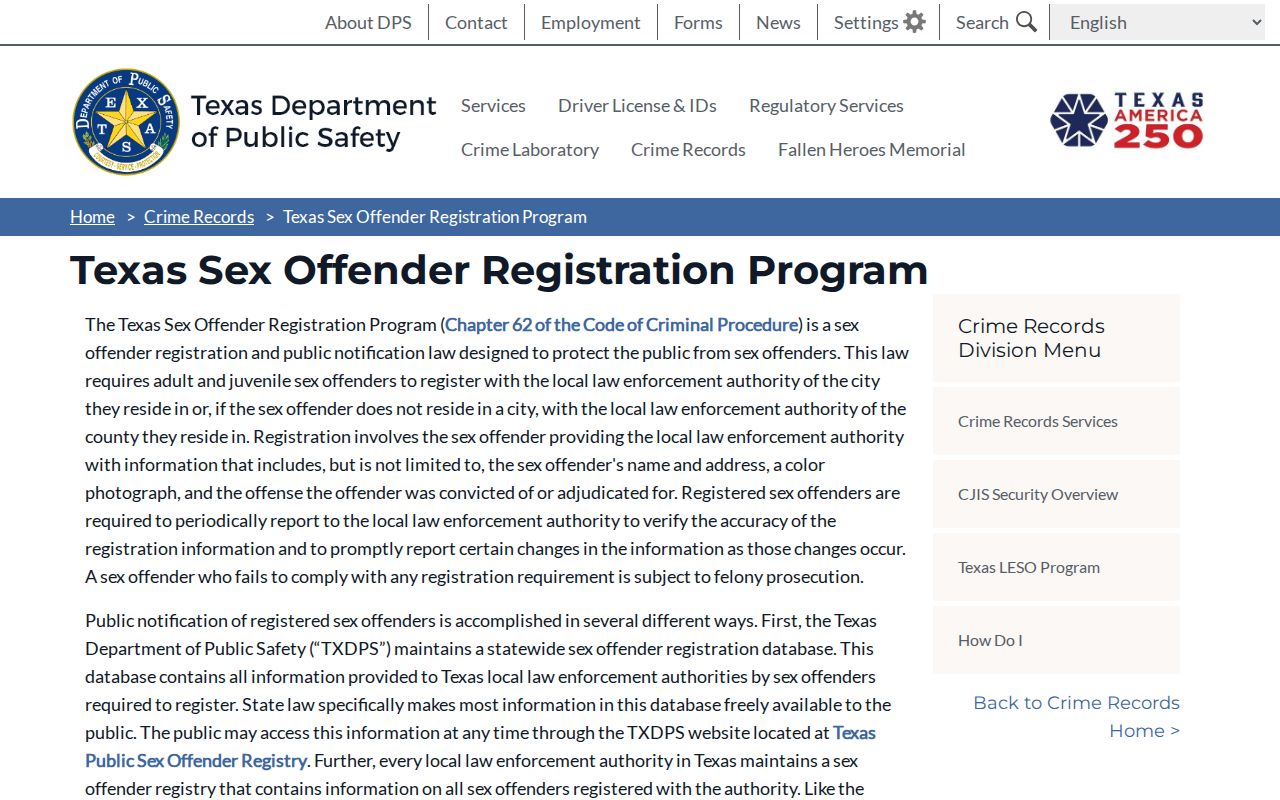
The program page adds legal and administrative context that a short Coryell County search result cannot show by itself.
Texas Registration Levels and Requirements
Texas registration duration rests on the offense category and the rules in Code of Criminal Procedure Chapter 62. Low, Moderate, High, and Civil Commitment risk labels do not map neatly onto the federal SORNA tier scheme. Risk can inform public notice and danger assessment, while Article 62.101 controls how long a duty lasts. A Coryell County profile therefore should not be reduced to a federal-style tier label.
| Texas category | Duration | Verification |
|---|---|---|
| Adult lifetime categories | Lifetime for sexually violent and other listed or repeat cases in Article 62.101(a) | Annual unless a more frequent rule applies |
| Other adult conviction or deferred categories | Generally ten years after the latest release, supervision discharge, or deferred discharge | Annual under the general rule |
| Juvenile adjudication | Generally ten years after disposition or completion, whichever is later; special rules apply | As required by the controlling order and statute |
| Two reportable matters | Duration still turns on Article 62.101 | Twice yearly for certain persons |
| Sexually violent predator | Verify the lifetime category in the statute | Every 90 days |
Eligibility, start dates, and discharge dates are fact-specific. The table is a route to the statute, not a ruling on one person’s duty. Juvenile information may also be nonpublic by court order.
Coryell Searches Across State Lines
The National Sex Offender Public Website adds a U.S. Department of Justice search layer when an address history, trip, or family-safety question crosses state lines. It does not replace Texas DPS for Coryell County details. Instead, NSOPW searches participating public registries and routes readers back to the jurisdiction that owns a record.
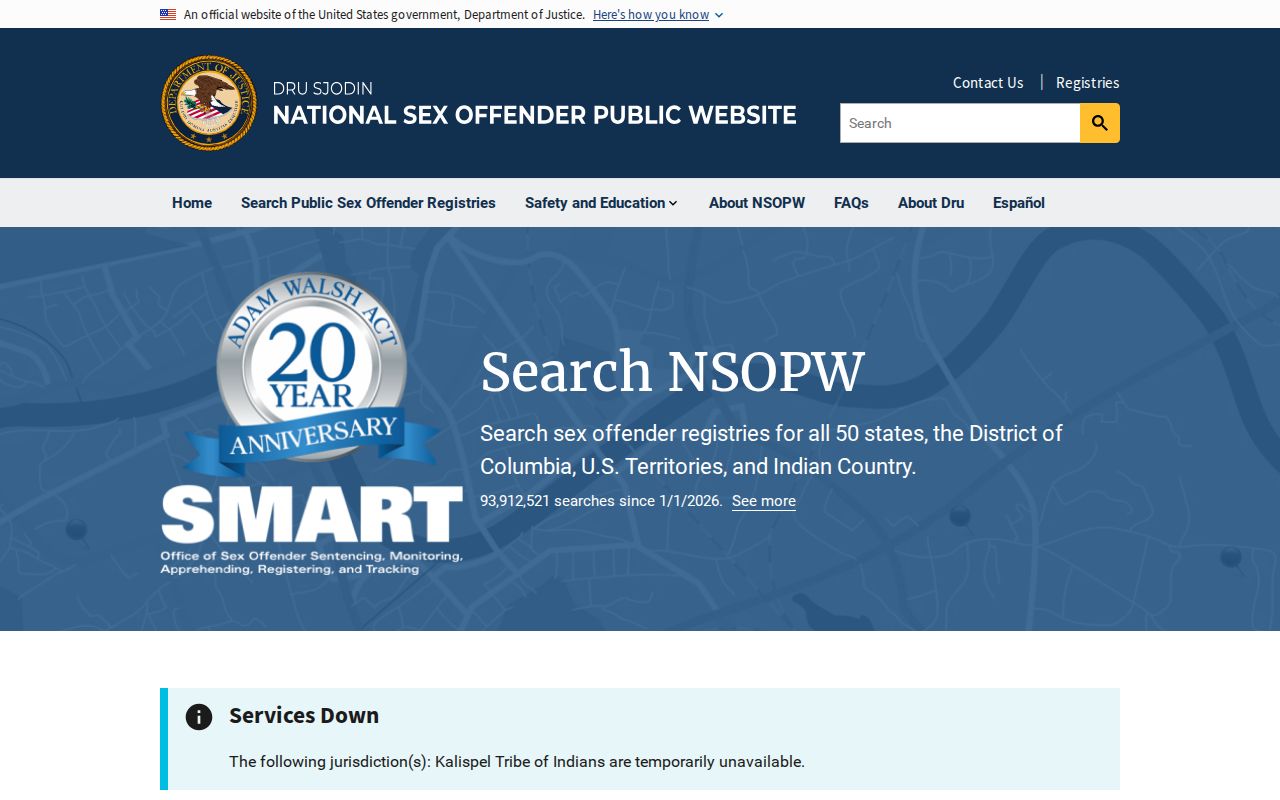
Use the national result to identify a state source, then confirm Texas entries in the DPS profile and with the correct local authority.
Report Coryell Registry Noncompliance
When a Coryell County entry appears stale or a person may not be following a registration duty, save the public profile URL and note the specific discrepancy. Do not investigate the residence or confront anyone. Contact the city police department for an address inside city limits, or call the Coryell County Sheriff for an unincorporated location. DPS can address statewide data issues and program questions.
Give the agency only the facts needed to locate the record, such as the listed name, address, SID if shown, and the reason the information appears inconsistent. Law enforcement decides whether the report warrants follow-up. A registry user does not have access to confidential verification files and should not infer noncompliance merely because an address looks old.
Note: Emergency threats belong with 911; ordinary registry data or compliance concerns should go to the appropriate local authority or Texas DPS.
Community Notification and Lawful Use
Registry information exists to support community awareness and practical safety steps. Texas law controls registration and notification through Chapter 62. It does not grant permission to threaten, stalk, harass, or take vigilante action. General Texas criminal laws can apply to that conduct even though research found no separate Chapter 62 penalty labeled solely as registry misuse.
Keep decisions tied to verified facts. A registration entry reports a legal status and selected public data. It does not show a person’s real-time location, and an address can change. Contact the registering authority when the exact address or compliance status matters. Never publish private household details that DPS withholds from the public profile.
Use Registry Data Lawfully: Chapter 62 permits public access for safety awareness, not threats or vigilantism. Harassment, stalking, intimidation, or other misuse can be a crime under Texas law.